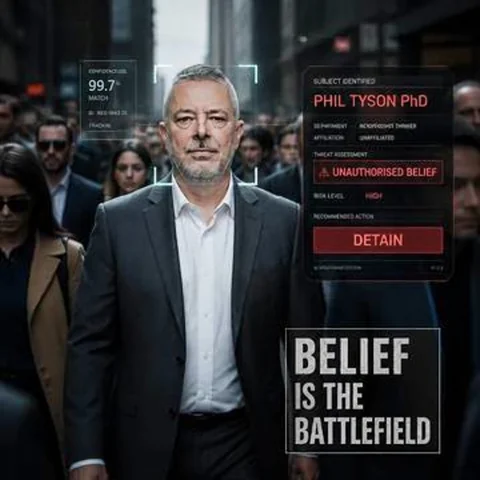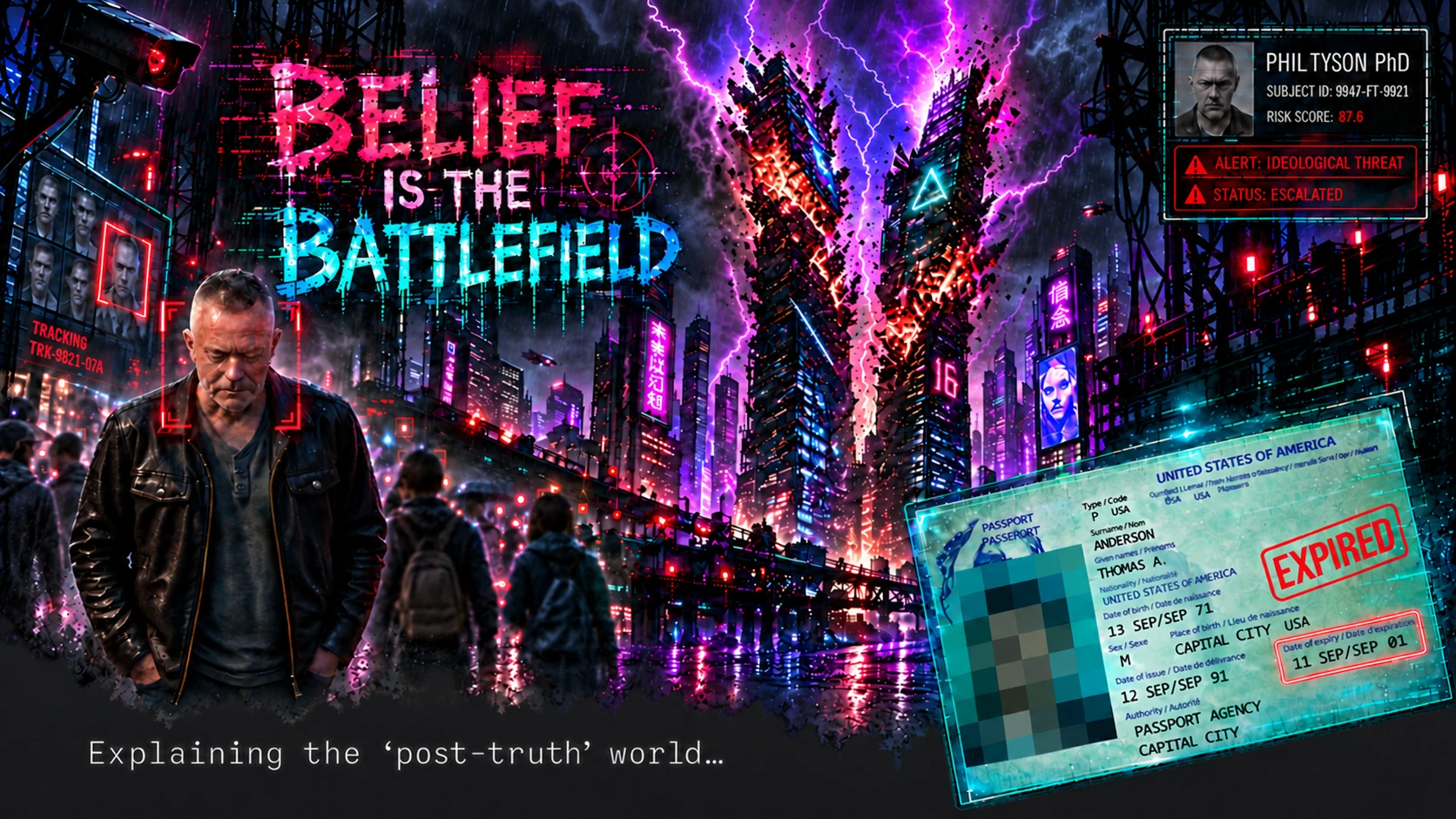

In the twenty-first century, we first lost trust in our institutions. Then we lost trust in each other.
This project argues that two events became symbolic of that collapse. The Matrix, released in 1999, supplied the vocabulary. Waking up. Taking the red pill. Seeing through the simulation. It gave millions of people a story to describe a feeling they couldn’t yet name.
Two and a half years later, 9/11 supplied the ontological shock. It took the official account of events, of motives, of who could be trusted, and rendered it, for some of us, permanently contested. Every subsequent crisis has been read through that same lens: what are we not being told?
Neither event came from nowhere. Both drew on much older currents in philosophy, religion, media theory, the psychology of belief, and even occultism. These had been building for centuries, long before anyone had a word for ‘post-truth.’ This project traces those ideas from antiquity to the present, asking not just how we arrived in a world where belief has become contested ground, but how we might also learn to navigate it, without losing our footing entirely.
Why this, why now
This project launched as a podcast marking the twenty-fifth anniversary of 9/11. For one full year it will expand into video, spoken word, fiction, and memes. Exploring the issue of concern through the technologies that deliver it. This site is the hub with the rest happening across social media. Find the links below.
Why I’m the one asking
I didn’t arrive at this subject by accident. My working life has moved between clinical practice, where I patiently sit with people as they examine what they believe and why, and systems research, where the same question appears at a different scale: not what one mind believes, but how do beliefs move, replicate, and harden across whole populations.
Psychotherapy, psychology and sociology turned out to be three lenses on the same problem. This project is where I’ve tried to point them at the same target.
I’m not asking these questions from outside the phenomenon. How could I? I’m as embedded in this contested information landscape as anyone else. This is partly why the project takes the form of art rather than argument.
Contradiction, ambiguity and contested truth can create a feeling of vertigo, disorientation and uncertainty.
Art can open those feelings to scrutiny, without forcing the need to close them down prematurely.
As this project unfolds, there will be groups popping up all over the internet, so if this material resonates with you, you can find the others.
Phil Tyson PhD is a Senior Accredited Psychotherapist, Chartered Psychologist, and sociologist, based in Manchester, UK, working in independent practice and online with clients throughout the UK and beyond.